
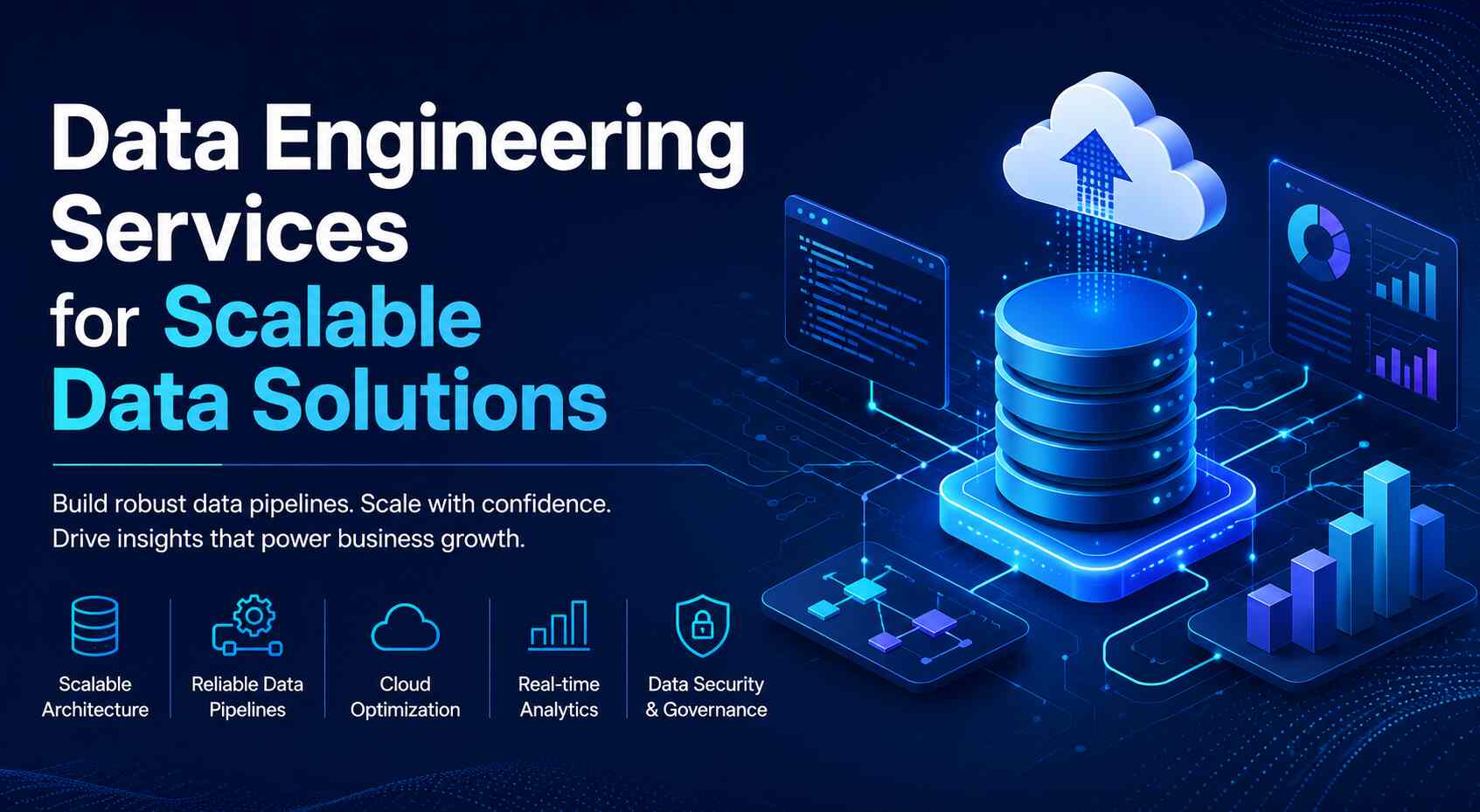
In today’s digital world, businesses generate massive amounts of data every day. From customer interactions and sales reports to cloud applications and IoT devices, organizations rely heavily on data to make informed decisions. However, raw data alone is not enough. Companies need efficient systems to collect, organize, process, and analyze this information effectively. Data engineering services help businesses manage and transform data into valuable insights for smarter decision-making.
Modern businesses require scalable data solutions that can handle growing data volumes while maintaining performance and reliability. Whether it is a startup managing customer analytics or a large enterprise processing real-time business insights, a scalable data infrastructure is essential for success. By implementing robust data pipelines and cloud-based architectures, organizations can improve efficiency, reduce operational costs, and gain a competitive advantage.
What Are Data Engineering Services?
Data engineering services involve designing, building, and managing systems that collect, store, and process large amounts of data. These services focus on creating reliable data pipelines that move information from multiple sources into centralized platforms such as data warehouses or data lakes.
Data engineers work with structured and unstructured data to ensure businesses can access accurate and timely information. Their responsibilities include data integration, ETL (Extract, Transform, Load) processes, database management, cloud migration, real-time analytics, and performance optimization.
By using professional data engineering solutions, businesses can transform raw information into meaningful insights that support better decision-making and business growth.
Importance of Scalable Data Solutions
As businesses grow, the amount of data they generate increases rapidly. Traditional data systems often struggle to handle this growth, leading to slow performance, data silos, and operational inefficiencies. Scalable data solutions are designed to overcome these challenges by providing flexible infrastructure that can expand according to business needs.
Scalable systems offer several important benefits:
→ Faster processing of large datasets
→ Improved business intelligence and reporting
→ Better customer insights and analytics
→ Enhanced data security and compliance
→ Reduced downtime and operational risks
→ Real-time access to business information
Organizations that invest in scalable data architecture can adapt more quickly to changing market demands and technological advancements.
Key Components of Data Engineering
Modern businesses rely on several essential elements to build efficient and scalable data systems.
1. Data Integration
Businesses often use multiple applications and databases to manage operations. Integrating data from these sources is essential for achieving a unified view of business performance. Data integration ensures that information flows seamlessly across systems without duplication or inconsistencies.
2. ETL Pipelines
ETL pipelines are the backbone of modern data infrastructure. They extract data from various sources, transform it into a usable format, and load it into storage systems for analysis. Efficient ETL pipelines improve data accuracy and reduce processing delays.
3. Cloud Data Platforms
Cloud technology has transformed the way organizations manage data. Cloud-based platforms provide scalability, flexibility, and cost efficiency. Many companies now rely on cloud services such as Azure, AWS, and Google Cloud for data storage and analytics.
4. Real-Time Data Processing
Real-time analytics enables businesses to make instant decisions based on current information. Industries such as finance, healthcare, and e-commerce benefit greatly from real-time data processing capabilities.
5. Data Security and Governance
Protecting sensitive information is a major priority for organizations. Strong security policies, encryption methods, and compliance frameworks help businesses maintain data integrity and prevent unauthorized access.
How Data Engineering Services Benefit Businesses
Professional Data engineering services help organizations improve operational efficiency and gain deeper insights into their business processes. These services enable companies to automate workflows, eliminate manual data handling, and optimize performance across departments.
One of the biggest advantages is improved decision-making. With accurate and centralized data, business leaders can analyze trends, forecast outcomes, and identify opportunities more effectively.
Another key benefit is scalability. As data volumes continue to grow, organizations need systems that can adapt without compromising performance. Scalable data infrastructure allows businesses to expand operations smoothly while maintaining reliability.
Additionally, businesses can reduce operational costs by automating repetitive processes and improving resource utilization. This leads to higher productivity and faster time-to-market for products and services.
Future Trends in Data Engineering
The field of data engineering continues to evolve with advancements in technology. Artificial intelligence, machine learning, and automation are becoming increasingly important in modern data ecosystems.
Some emerging trends include:
→ AI-driven data automation
→ Serverless data architectures
→ Advanced cloud analytics
→ Real-time streaming data pipelines
→ DataOps for faster deployment
→ Improved data governance frameworks
Companies that embrace these innovations can stay ahead in a highly competitive digital landscape.
Choosing the Right Data Engineering Partner
Selecting the right service provider is essential for building reliable and scalable data solutions. Businesses should look for a partner with expertise in cloud technologies, database management, analytics, and infrastructure optimization.
A trusted provider should offer customized solutions based on business requirements while ensuring data security, scalability, and long-term support. Experience across industries and strong technical capabilities are also important factors to consider.
Conclusion
In a data-driven economy, businesses need efficient systems to manage and utilize information effectively. Data engineering services provide the foundation for scalable data solutions that improve operational efficiency, support advanced analytics, and enable smarter decision-making.
From cloud migration and ETL pipelines to real-time analytics and data governance, modern data engineering helps organizations unlock the full value of their data. Companies that invest in scalable infrastructure today will be better prepared for future growth and innovation.
GeoPITS delivers reliable and scalable data solutions tailored to modern business needs. With expertise in database management, cloud technologies, analytics, and infrastructure optimization, GeoPITS helps organizations build strong data foundations that drive long-term success.